
Some colors simply fill a room, while others shape how it feels. Deep forest green and muted teal have the depth to do exactly that. Both are rich enough to make an impact, but they still feel grounded because of their connection to nature.
A thoughtful green interior can feel calm, sophisticated, and surprisingly versatile. When teal is added into the mix, the palette becomes more layered without feeling overly bright. Together, these shades work beautifully in homes that want color without losing a sense of balance.
Why Forest Green Works So Well Indoors
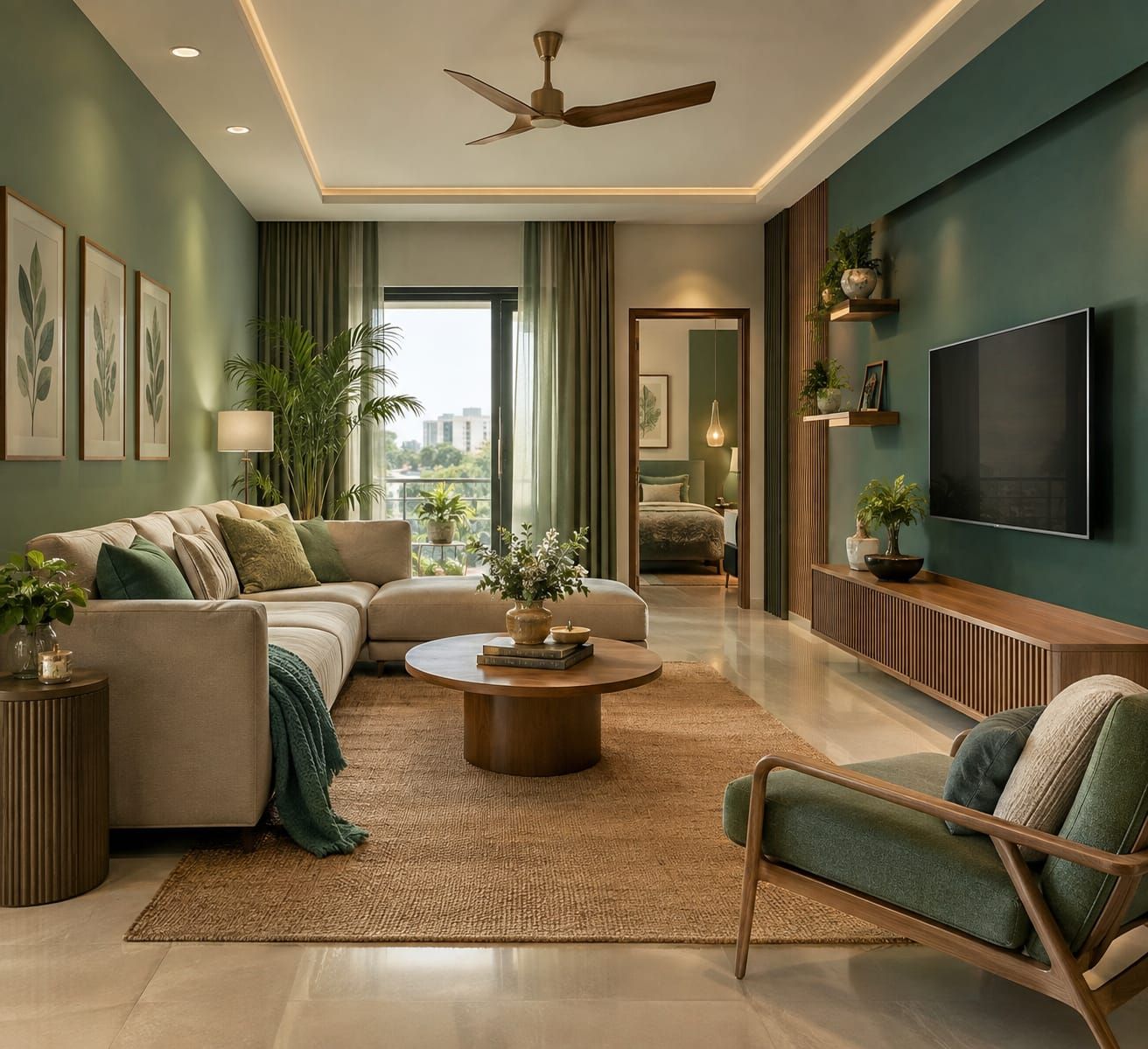
Forest green has depth, but it does not feel harsh. It brings the same sense of calm often associated with trees, shaded gardens, and natural landscapes. With green interior design, this color could be used as a wall color itself, as an accent color, or even via furniture and accessories.
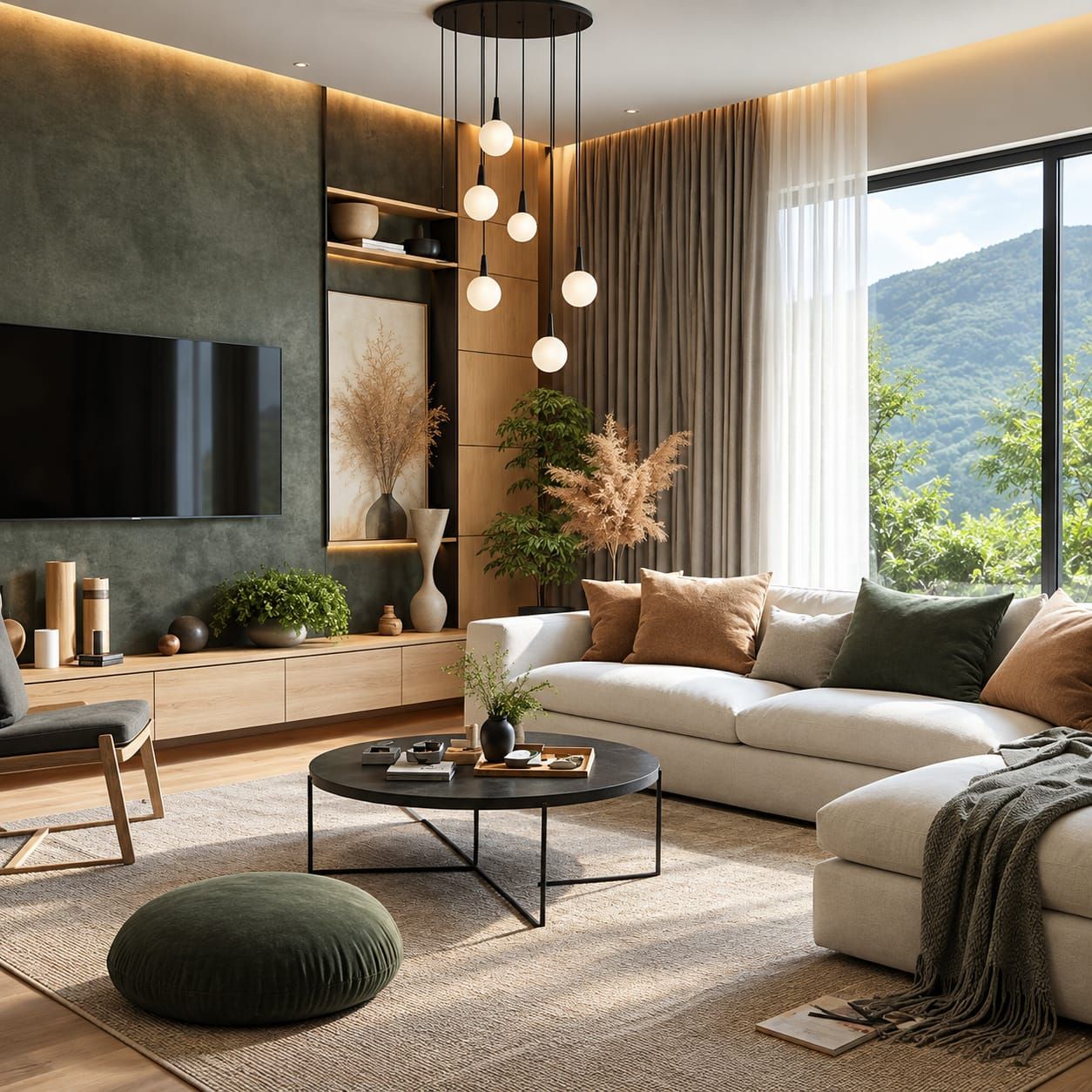
Dark green shades pair especially well with natural wood and warm lighting, creating a rich yet comfortable atmosphere. In rooms with plenty of natural light, forest green walls can feel cosy and inviting rather than heavy or enclosed.
Muted Teal Adds a Softer Kind of Drama
Teal sits somewhere between blue and green, which makes it easy to pair with both cool and warm tones. A muted teal wall colour feels less intense than a brighter turquoise, yet it still gives a room personality. It works particularly well when you want more depth than a neutral can offer without going as dark or bold as navy. In a teal interior design, the shade can be used on walls, cabinetry, upholstery, or smaller details such as cushions and ceramics.
Pair Forest Green With Warm Neutrals
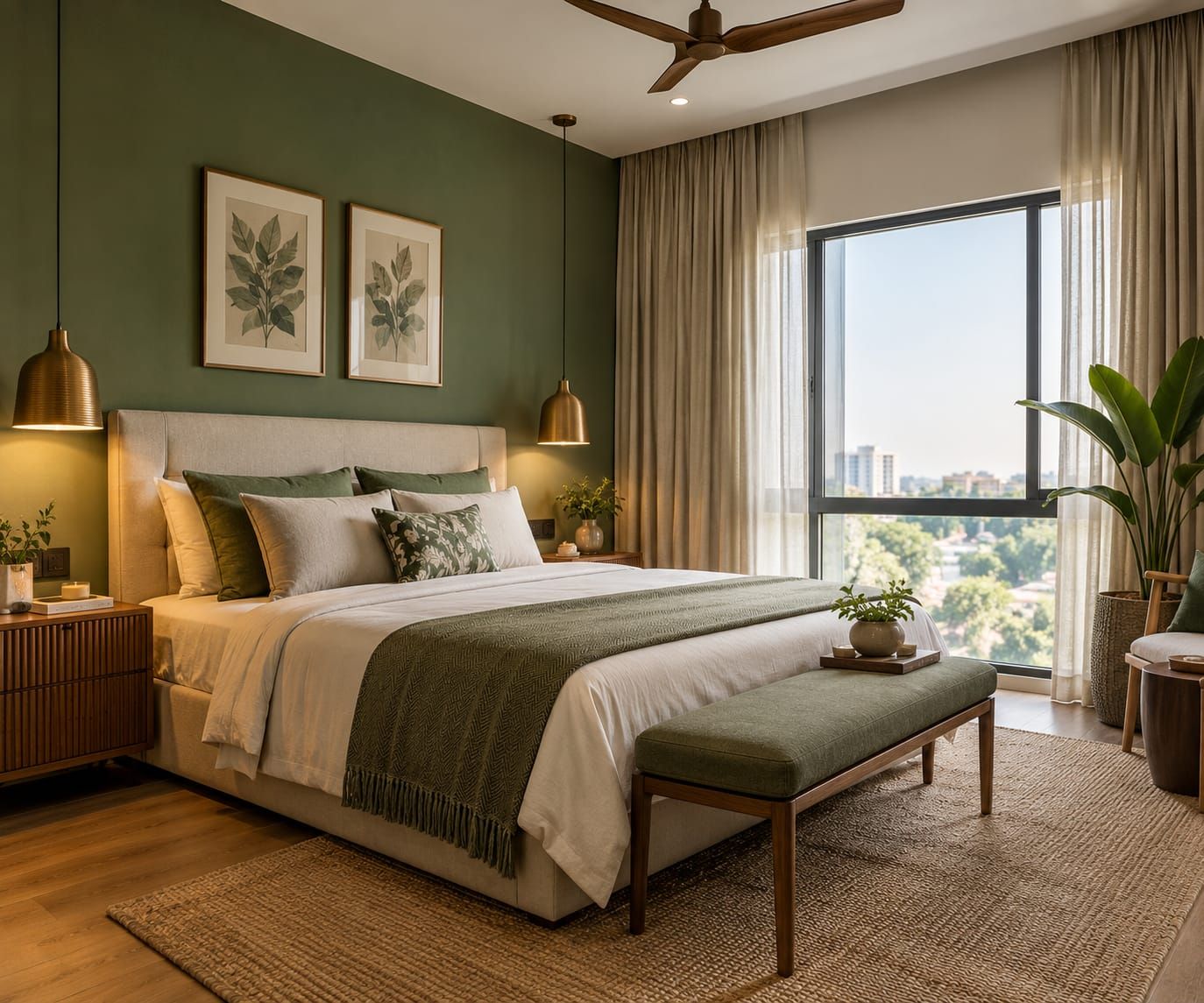
Forest green works best when balanced with softer shades. Cream, beige, warm white, taupe, and sand balance its richness and keep the overall palette from feeling too heavy. These tones also stop darker green from feeling too formal. For anyone exploring home colour combinations, green and warm neutrals are one of the easiest places to begin. Add timber, jute, linen, or stone and the overall palette starts to feel relaxed rather than overly styled.
Combine Teal With Natural Wood
Teal and wood work especially well together because one brings color while the other adds warmth. Walnut, oak, and darker stained wood can all complement muted teal depending on the mood of the room. In a dining space, teal walls with a wooden table can feel elegant without being too polished. This pairing suits modern interiors because it allows the room to have character without relying on too many decorative elements.
Use Forest Green as an Accent Wall
Not every room needs to be painted entirely in a dark shade. A forest green accent wall can create enough contrast on its own, particularly behind a bed, sofa, or shelving unit. It helps define the space and gives furniture a stronger backdrop. Among current wall colour ideas, this approach is useful for homeowners who want to introduce deeper tones without committing to all four walls.
Let Teal Work in Bedrooms
Muted teal can bring a calm quality into sleeping spaces. Unlike very bright blues, it has a more grounded appearance, especially when paired with off-white bedding, wooden furniture, and soft lighting. For bedroom walls, muted teal offers a restful feel without making the space look plain.
Bring in Olive and Sage as Supporting Colors
Forest green does not have to stand alone. Softer shades such as olive green and sage green can help create a more gradual transition between dark walls and lighter furnishings. They can be integrated through cushions, artwork, rugs, or decorative accessories. This layered approach creates a more complete earthy colour palette, particularly when combined with beige, brown, or muted clay tones.
Frequently Asked Questions
What colors go best with deep forest green interiors?
Deep forest green pairs well with warmer neutral colors such as ivory, beige, taupe, and even warm whites. Even natural elements like wood, stone, linen, and earth tones make it look softer.
Is muted teal a good color for living rooms and bedrooms?
Yes. The muted teal color looks great in both the living room and bedroom settings because it provides color without being too bright. In bedrooms, the blue-green color can provide a more relaxing environment, whereas in the living room, the color can add depth.
Can forest green and muted teal be used together in the same room?
Yes. Forest green and muted teal can blend well together provided that one serves as the dominant color while the other acts as a complementary one.
Does forest green make a small room look darker?
Forest green can create a dark effect in a small room if there is less natural light. However, this can be avoided if the color palette is planned correctly. Using forest green on one wall and keeping the remaining walls lighter adds depth without making the space feel smaller or enclosed.
Conclusion
The best green and teal interiors aren’t ones that are overdone; they are ones that know where to stop. Allow one deep color to lead; soften it with warm neutral colors and texture from natural materials such as wood, stone, linen, wool, or ceramics. The result should not feel like a carefully constructed theme, but a space that feels naturally rich, layered, and connected to the outdoors.
Ready for a nature-inspired palette?
Explore SpazioLiv for thoughtfully designed pieces that bring depth, warmth, and a nature-inspired character to modern homes.
Book Your Free Consultation