In culturally rooted homes across Pune, the revival of Pichwai art for living room interior design is not a trend but a return to heritage. To truly understand why homeowners and designers in Pune value this art form, we must first look at its sacred origin.
What an Ancient Rasleela Shrinathji Pichwai Truly Looked Like
The earliest Rasleela Pichwai paintings were not decorative artworks as we see today — they were living ritual textiles, much like how Pichwai art for living room interior today carries meaning beyond aesthetics in refined Pune residences.
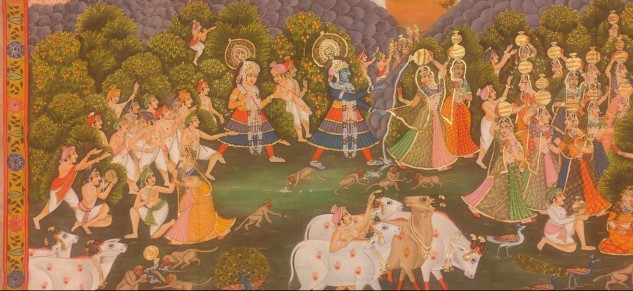
Imagine a large hand-painted cloth, slightly irregular in weave, rich with natural mineral pigments:
- Shrinathji (Krishna) at the center, dark indigo or deep blue
- Surrounded by Gopis in circular movement, symbolising Rasleela; the cosmic dance of divine love
- Lotus ponds, kadamba trees, cows, moonlit skies filling the background
- Borders packed with miniature narratives festivals, devotees, temple rituals
Every inch was storytelling. Nothing was empty. Nothing was random — a philosophy now echoed in thoughtfully curated Pichwai art for living room interior concepts adopted by heritage-inspired homes in Pune.
Where Is the Very First Rasleela Shrinathji Pichwai Found?
There is no single signed “first” painting, but art historians agree on this origin:
📍 Nathdwara, Rajasthan — Late 17th Century.
- The earliest Rasleela Pichwai artworks appeared after 1672 CE, when Shrinathji’s idol was installed at Nathdwara.
- Temple records and preserved textiles confirm that Rasleela scenes were among the first themes painted, because they represented Krishna’s most divine and emotionally resonant Leela.
Many of these early Pichwais are:
- Still preserved within the Shrinathji Temple (not publicly displayed)
- Held in private Vaishnav haveli collections
- Studied and archived by Indian art historians and museums
These are considered the OG Rasleela Pichwais — sacred, rare, and irreplaceable — inspiring today’s Pichwai art for living room interior selections in premium homes across Pune.
Origin of Pichwai Art — Why It Exists at All
Pichwai art originated as a functional spiritual necessity, not as wall décor.
• “Pich” = behind
• “Wai” = hanging
Pichwai paintings were hung behind Shrinathji to:
• Change the deity’s environment with seasons
• Celebrate festivals visually
• Immerse devotees emotionally into Krishna’s world
This makes Pichwai one of the few Indian art forms born directly inside daily worship, not royal courts — a reason Pichwai art for living room interior feels authentic and spiritually aligned in modern Pune homes.
How Deeply Rooted Is This Culture in India?
India’s devotion to Shrinathji and Rasleela is centuries deep — and its influence now extends to urban cultural hubs like Pune.
Real, Living Examples
• Shrinathji Temple, Nathdwara receives lakhs of devotees annually — a living proof that Rasleela is not mythology, but ongoing faith.
• Rasleela festivals are still reenacted across Rajasthan, Gujarat, Braj region, and Vrindavan.
• Major Indian museums and cultural institutions frequently feature Rasleela Pichwai exhibitions, calling them “spiritual storytelling in pigment.”
This continuity — from 17th century temples to 21st century homes — is why Pichwai art for living room interior remains relevant for culturally conscious families in Pune.
Spiritual Impact of Worshipping Shrinathji at Home
Spiritually, Shrinathji represents:
• Leela (divine play) — life lived with devotion, not fear
• Joy with discipline
• Prosperity balanced with humility
Homes that place Shrinathji imagery often experience:
• Emotional warmth
• Calm social energy
• A sense of celebration rather than austerity
Rasleela specifically symbolises divine love that includes everyone, making Pichwai art for living room interior ideal for shared family spaces like living rooms in Pune residences.
Why Pichwai Art Is Perfect for Living Room Interiors
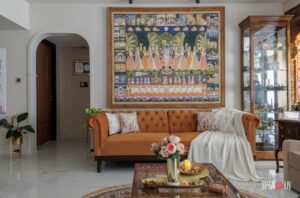
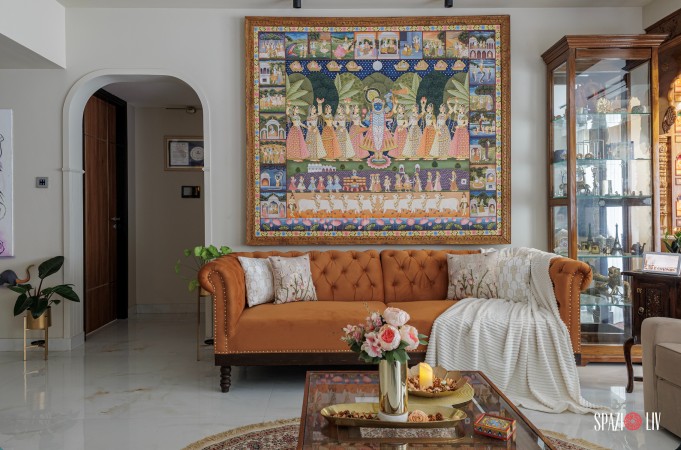
Your placement — behind the sofa in the living room — is architecturally and spiritually brilliant, especially in design-forward homes of Pune.
Interior Design Alignment
• Central focal wall mirrors temple sanctum placement
• Narrative scale suits large uninterrupted surfaces
• Color richness complements wood, marble, brass, and neutral upholstery
• Acts as art + culture + identity, not just decoration
Unlike modern abstract art, Rasleela Pichwai:
• Ages gracefully
• Never goes out of relevance
• Grows emotionally richer over time
Why Designers & Homeowners Widely Accept Pichwai Today
Pichwai bridges:
• Ancient Indian wisdom
• Contemporary luxury
• Emotional storytelling
In modern interiors, it offers:
• Cultural grounding
• Visual warmth
• Spiritual calm without rigidity
That is why it works beautifully in:
• Living rooms
• Double-height spaces
• Heritage-inspired luxury homes
Final Thought
By placing Rasleela Shrinathji Pichwai behind the sofa, you have:
✨ Turned the living room into a modern haveli
✨ Brought temple philosophy into daily family life
✨ Shown how Indian interiors can be rooted, refined, and timeless
luxury interior design, vastu interiors, spiritual decor, blue and gold art, home decor ideas, modern home design, luxury home decor, interior trends 2025, positive energy home, mindful homes, designer wall art, home styling ideas, art for homes, indian interior design, elegant interiors, wall art decor, meditation corner, vastu tips, calming interiors, symbolic art, contemporary decor, house aesthetics, interior vibes, spazioliv